
At the close of 2024, we held our 24-month General Meeting, where project partners showcased the latest breakthroughs. This milestone marked the halfway point of our journey, highlighting significant advancements in developing an innovative thermochemical energy storage system designed for seamless integration with Concentrated Solar Power (CSP) technologies.
As part of Work Package 7, ABraytCSPfuture also hosted its first Stakeholder Workshop, organized by Fraunhofer IWKS. This event brought together CSP plant operators and industry representatives to exchange insights on the project’s pioneering air-Brayton gas turbine cycles for high-temperature CSP plants. Discussions centered on environmental and socio-economic impact assessments, materials innovation, and the integration of cutting-edge technology.
The three-hour online event included presentations from project leaders and breakout discussions in three focus groups:
Materials Development: Discussions covered the stability and scalability of inorganic perovskite materials, their environmental impact, and their recyclability. Emphasis was placed on the need for materials capable of withstanding thousands of thermal cycles while maintaining performance. Modular brick designs for enhanced manufacturing flexibility were also proposed, alongside strategies for reducing environmental impacts, such as substituting manganese with iron in material compositions.
CSP and Brayton Cycle Integration: Participants examined technical challenges and market trends, noting limited recent adoption of CSP in Europe but significant advancements in other regions like China. Discussions emphasized the potential of integrating thermochemical energy storage with Brayton cycles, enabling plants to utilize surplus electricity during low solar periods and generate power during peak demand. High-temperature CSP was also highlighted as a key enabler for decarbonizing industrial processes requiring elevated temperatures, such as those in the metallurgical and chemical sectors.
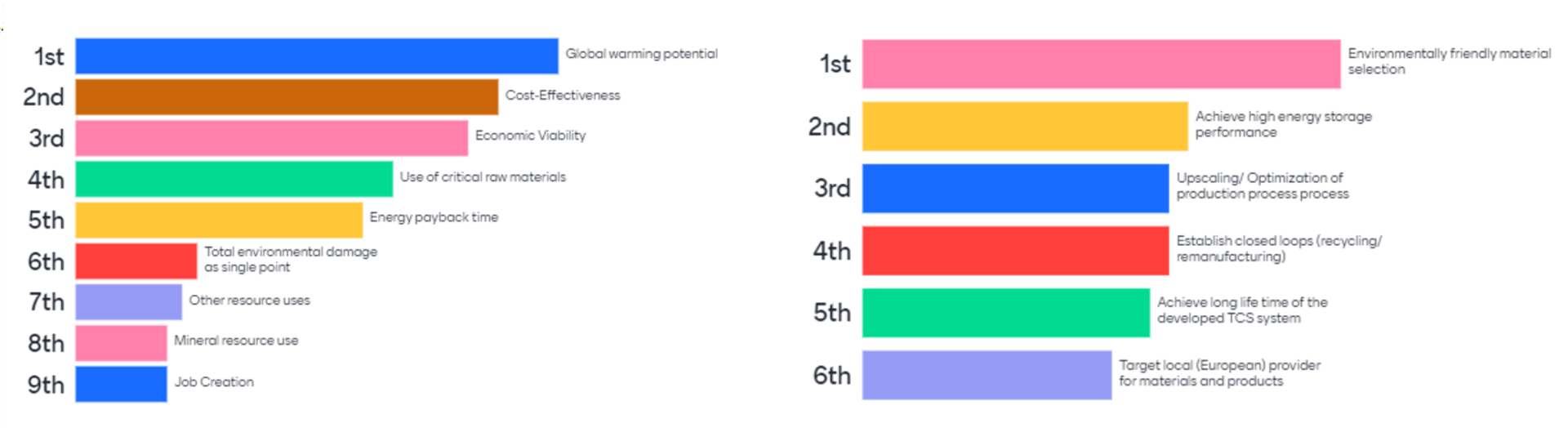
Environmental and Socio-Economic Impacts: Stakeholders prioritized global warming potential, cost-effectiveness, energy payback time, and critical raw material usage as key indicators. Strategies to minimize impacts included selecting environmentally friendly materials, improving storage performance, and optimizing production and operational phases.
The workshop provided valuable insights that will shape future project developments. For more details, visit our website or contact us directly:
📧 christos.agrafiotis@dlr.de (Project Coordinator)
📧 emanuel.ionescu@iwks.fraunhofer.de (WP7 Leader)

This project is funded by the European Union’s Horizon Europe research and innovation programme under grant agreement No. 101084569.